

What is haemophilia A?
Haemophilia A is a bleeding disorder that means your blood cannot clot properly.
Blood contains lots of clotting factors, which interact with each other in a sequence to make a clot form. This is called the ‘clotting pathway’.
People with haemophilia A do not have enough of one of these clotting factors – factor eight (factor VIII).
The clotting cascade
This illustration represents factors in the clotting pathway that are relevant to haemophilia A.
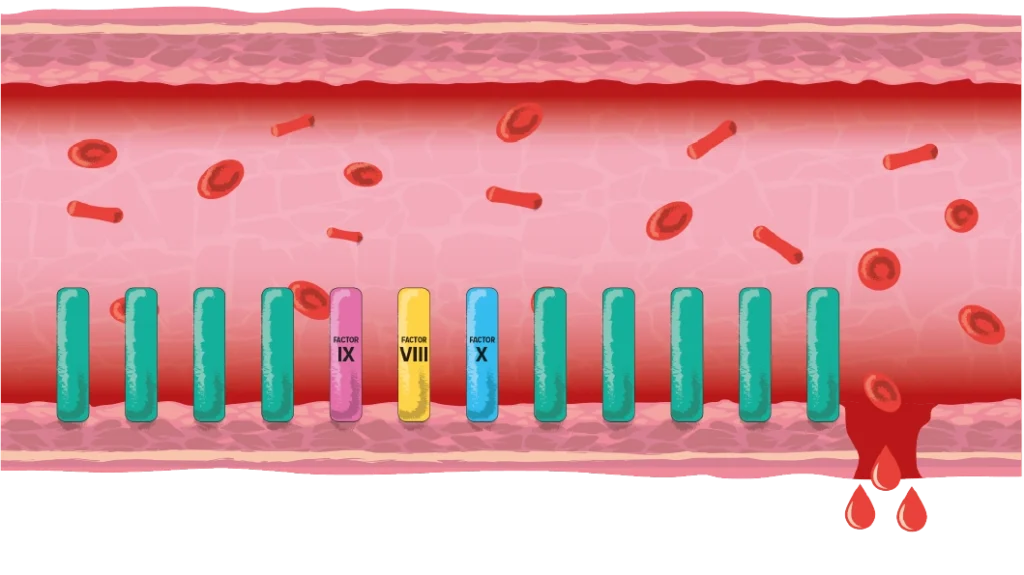
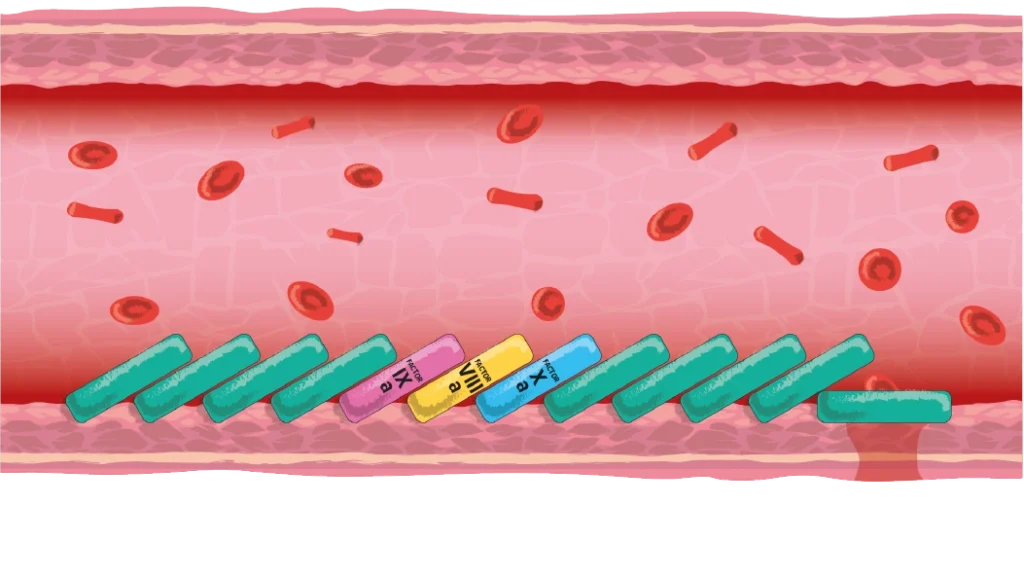
Factor VIII is the link between activated factor nine (factor IXa) and factor ten (factor X).
When factor IXa falls, factor VIII needs to be in place so that it can fall on to the factor X domino.
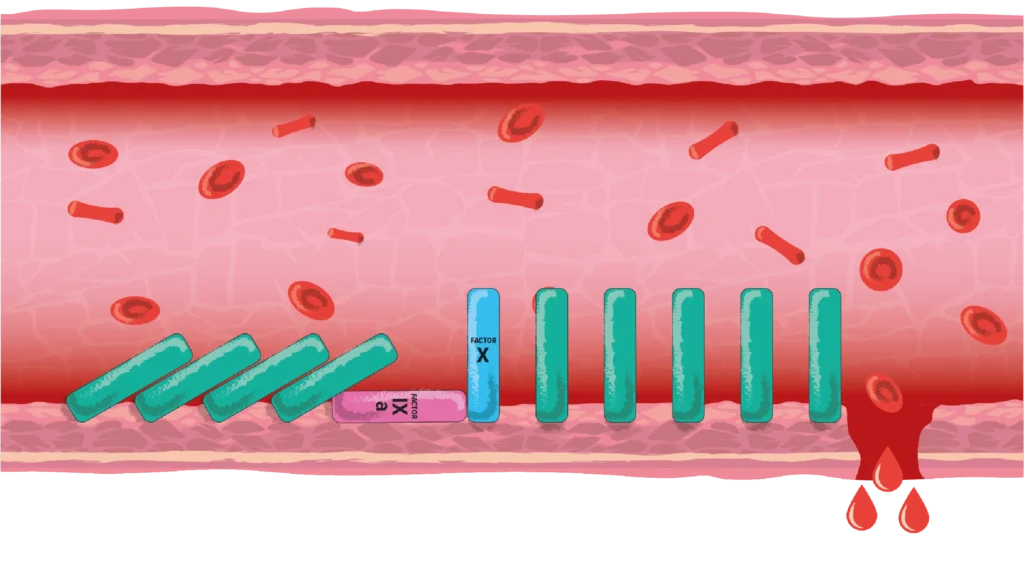
If factor VIII is missing, the rest of the dominoes will not fall and a clot will not form.
Haemophilia A can be managed with factor VIII replacement therapy. Factor VIII therapy can be used to help blood clot in response to injury. It can also be administered regularly, to help prevent bleeds from happening. Taking a treatment regularly to try and prevent bleeding is called prophylaxis.
Haemophilia A can be managed with factor VIII replacement therapy. Factor VIII therapy can be used to help blood clot in response to injury. It can also be administered regularly, to help prevent bleeds from happening. Taking a treatment regularly to try and prevent bleeding is called prophylaxis.
Haemophilia A with inhibitors to factor VIII
Factor VIII replacement therapy is not made in your body. Your immune system can therefore treat it as ‘foreign’ and develop antibodies against factor VIII.
In haemophilia antibodies to factor VIII are known as “inhibitors”. Inhibitors reduce the effect of factor VIII replacement therapy. In some people, inhibitors can stop factor VIII replacement therapy from working.
Up to 1 in 3 people with severe haemophilia A develop inhibitors to factor VIII at some point in their lives.1
In many people with haemophilia A with inhibitors to factor VIII, bypassing agents are used to help manage bleeds. These include activated recombinant factor VII (rFVIIa, Novoseven) and activated prothrombin complex concentrate (aPCC, Feiba).
In haemophilia antibodies to factor VIII are known as “inhibitors”. Inhibitors reduce the effect of factor VIII replacement therapy. In some people, inhibitors can stop factor VIII replacement therapy from working.
Up to 1 in 3 people with severe haemophilia A develop inhibitors to factor VIII at some point in their lives.1
In many people with haemophilia A with inhibitors to factor VIII, bypassing agents are used to help manage bleeds. These include activated recombinant factor VII (rFVIIa, Novoseven) and activated prothrombin complex concentrate (aPCC, Feiba).
Reference: 1. Meeks SL, et al. Hematology Am Soc Hematol Educ Program. 2016 Dec 2;2016(1):657-662.
Useful resources


View all our useful resources in one place, from booklets and guides to videos and animations