

Life on Hemlibra
What if I have a bleed?
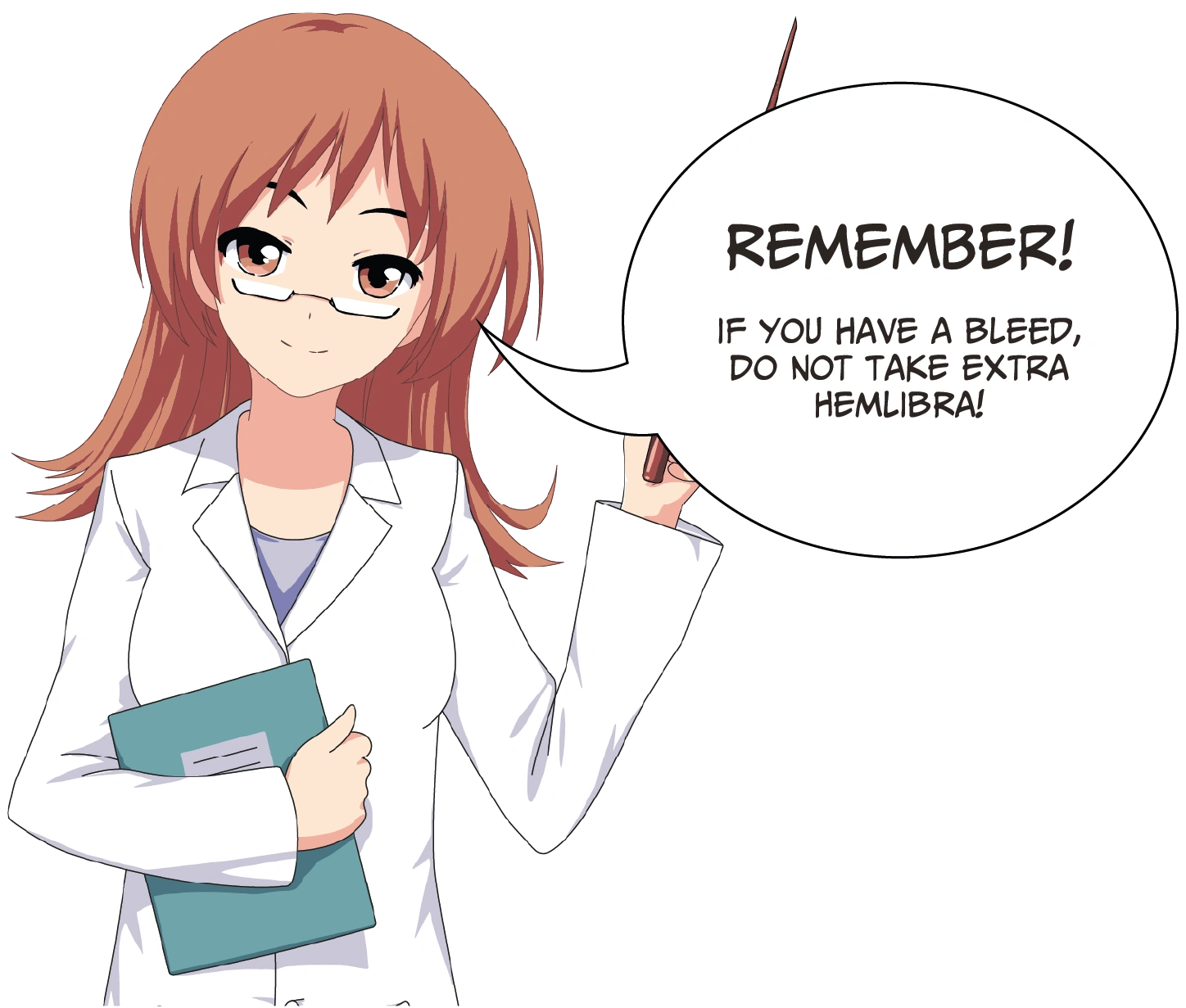
It’s very important you and the person who looks after you talk to your haemophilia care team about what to do if you have a bleed when you are taking Hemlibra.
- You might need to take bypassing agents if you have a bleed. If you have used these before, this time it may be different from how you used them in the past
- Make sure you have your emergency plan before you start taking Hemlibra. Your haemophilia team will help you with this
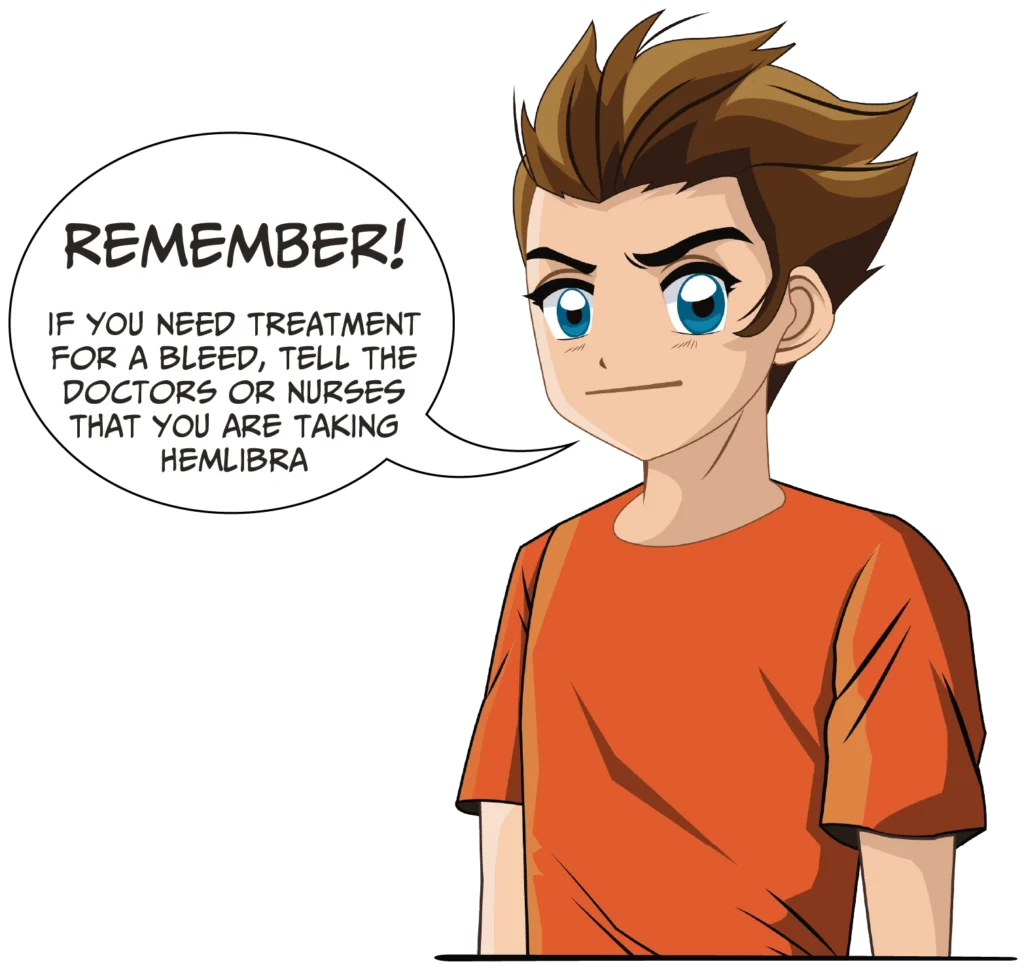
If you need to see a doctor or nurse, make sure that you take your patient alert card with you.
If you are using HealthID or have a MedicAlert bracelet or necklace, you should update your information.
What side effects might I get with Hemlibra?
Very common: may affect more than 1 in 10 people
- A reaction in the area where the injection is given (redness, itching, pain)
- Headache
- Joint pain
Common: may affect up to 1 in 10 people
- Fever
- Muscle aches
- Diarrhoea
- Itchy rash or hives (urticaria)
- Skin rash
Uncommon: may affect up to 1 in 100 people
- Destruction of red blood cells (thrombotic microangiopathy)
- Blood clot in a vein behind your eye (cavernous sinus thrombosis)
- Severe damage of the skin tissue (skin necrosis)
- Swollen face, tongue and/or throat and/or difficulty in swallowing, or hives, together with difficulty in breathing which are suggestive of an angioedema
- Blood clot in a vein near the surface of the skin (superficial thrombophlebitis)
- Lack of effect or decreased response to treatment
- Allergic reaction
If you get any side effects, talk to your doctor, pharmacist or nurse. This includes any possible side effects not listed in the package leaflet. You can also report side effects directly via the Yellow Card Scheme at www.mhra.gov.uk/yellowcard, or search for MHRA Yellow Card in the Google Play or Apple App Store.
You should also report side effects to Roche Products Ltd by emailing the Roche Drug Safety Centre at welwyn.uk_dsc@roche.com or calling +44 (0) 1707 367554.
By reporting side effects you can help provide more information on the safety of this medicine.
Antibody formation (immunogenicity)
You may notice that bleeding is not being controlled with your prescribed dose of Hemlibra. This could be due to the development of antibodies to this medicine.
Talk to your doctor immediately if you or your caregiver notices an increase in bleeds. Your doctor may decide to change your treatment if this medicine stops working for you.
Using bypassing agents with Hemlibra
Before starting Hemlibra, talk to your doctor and carefully follow their instruction on when to use a bypassing agent and the dose and schedule you should use. During the studies of Hemlibra, serious side effects were reported when using aPCC while receiving Hemlibra. Stop using Hemlibra and aPCC and talk to a doctor immediately if you or your caregiver notices any of the following side effects:
Destruction of red blood cells (thrombotic microangiopathy:
- Confusion, weakness, swelling of arms and legs, yellowing of skin and eyes, vague belly (abdominal) or back pain, feeling sick (nausea), being sick (vomiting) or urinating less – these symptoms may be signs of thrombotic microangiopathy
Blood clots (thromboembolism):
- Swelling, warmth, pain or redness – these symptoms may be signs of a blood clot in a vein near the surface of the skin
- Headache, numbness in your face, eye pain or swelling or problems with your vision – these symptoms may be signs of a blood clot in a vein behind your eye
- Blackening of the skin – this symptom may be a sign of severe damage to the skin tissue
If you need to go to hospital for a bleed, make sure you tell the healthcare team that you are taking Hemlibra. Remember to take your patient alert card with you. Refer to your emergency plan and read the package leaflet contained in the box with your medicine, the guide for patients/carers and the patient alert card for more information.