

What is haemophilia A?
Blood contains lots of clotting factors, which interact with each other in a sequence to make a clot form. This is called the ‘clotting pathway’. People with haemophilia A do not have enough of one of these clotting factors – factor eight (factor VIII).
Haemophilia A can be described as mild, moderate or severe, depending on how much FVIII is in the blood.
People with severe haemophilia A have <1% FVIII and people with moderate haemophilia A have between 1-5%. Some people with moderate haemophilia A can bleed more than others. This is often referred to as having “a severe bleeding phenotype”.
The clotting cascade
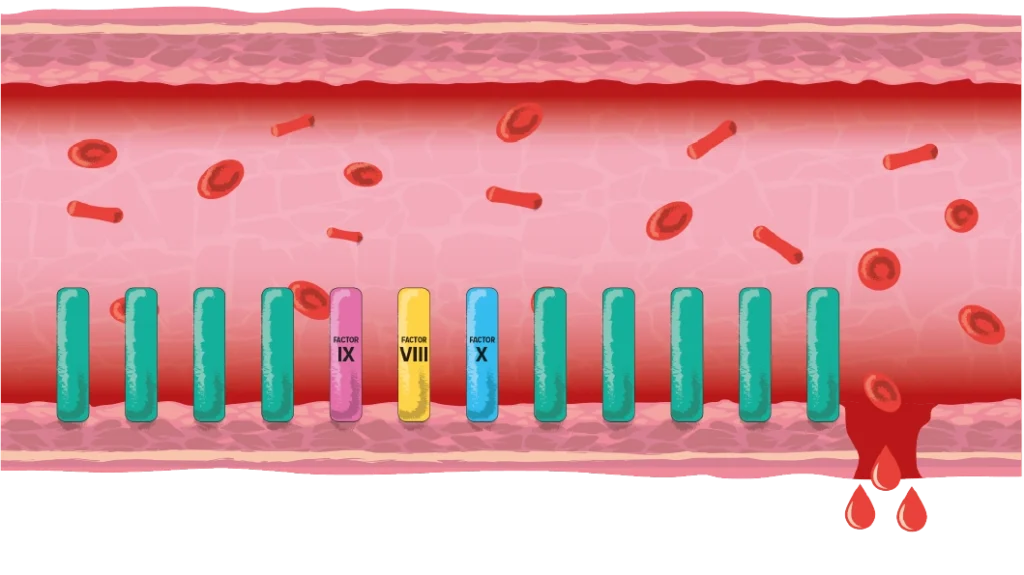
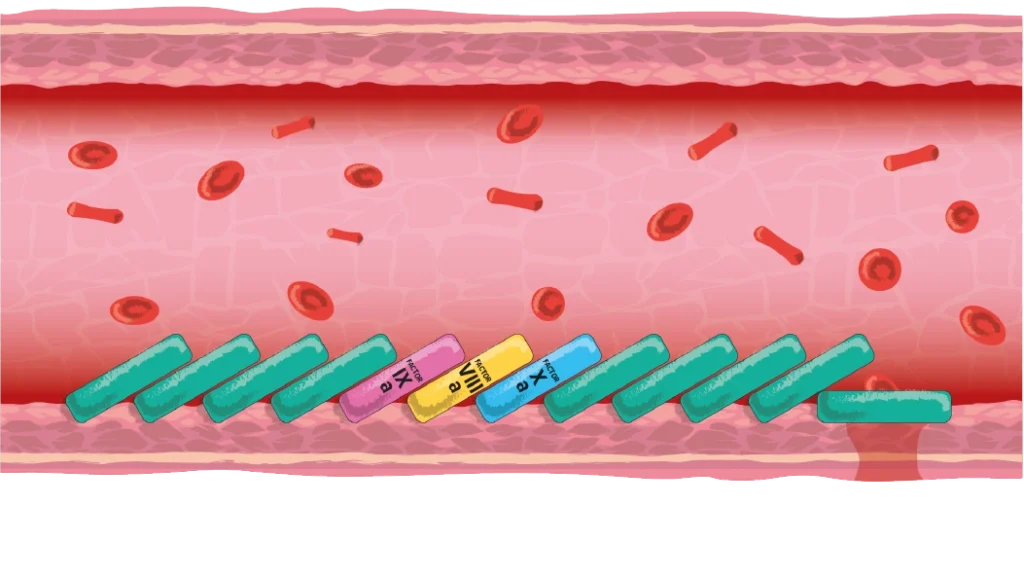
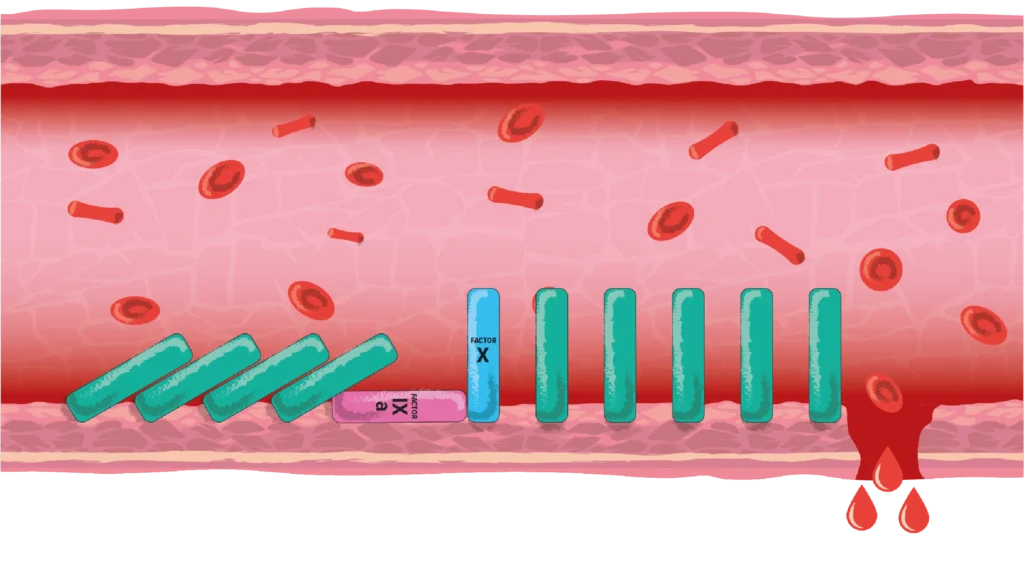
If factor VIII is missing, the rest of the dominoes will not fall and a clot will not form.
Haemophilia A can be managed with factor VIII replacement therapy. Factor VIII therapy can be used to help blood clot in response to injury. It can also be administered regularly, to help prevent bleeds from happening. Taking a treatment regularly to try and prevent bleeding is called prophylaxis.


View all our useful resources in one place, from booklets and guides to videos and animations